Last updated: — Reviewed by the WunderHub editorial team. Rental price data sourced from Wunderflats bookings, June 2025–May 2026.
Key takeaways
- Berlin is 30–40% cheaper than Paris, Amsterdam, or London. A comfortable single expat budget runs to around 2,500 EUR/month including rent.
- Based on Wunderflats booking data (June 2025–May 2026), 72% of furnished rentals in Berlin fall between 1,000 and 2,000 EUR/month — with 1,000–1,500 EUR the most common range.
- 53.5% of Wunderflats tenants in Berlin rent for work reasons; the largest professional groups are software engineers, general managers, and founders.
- The average Wunderflats stay in Berlin is 154 days — just over 5 months. Berlin is a city for medium-term moves, not short lets.
- The Deutschlandticket covers all public transport across Germany for 63 EUR/month — the single most practical transport option for most expats.
- Anmeldung (resident registration) is legally required within 14 days of moving in. It unlocks your bank account, health insurance, and most official services.
Overview
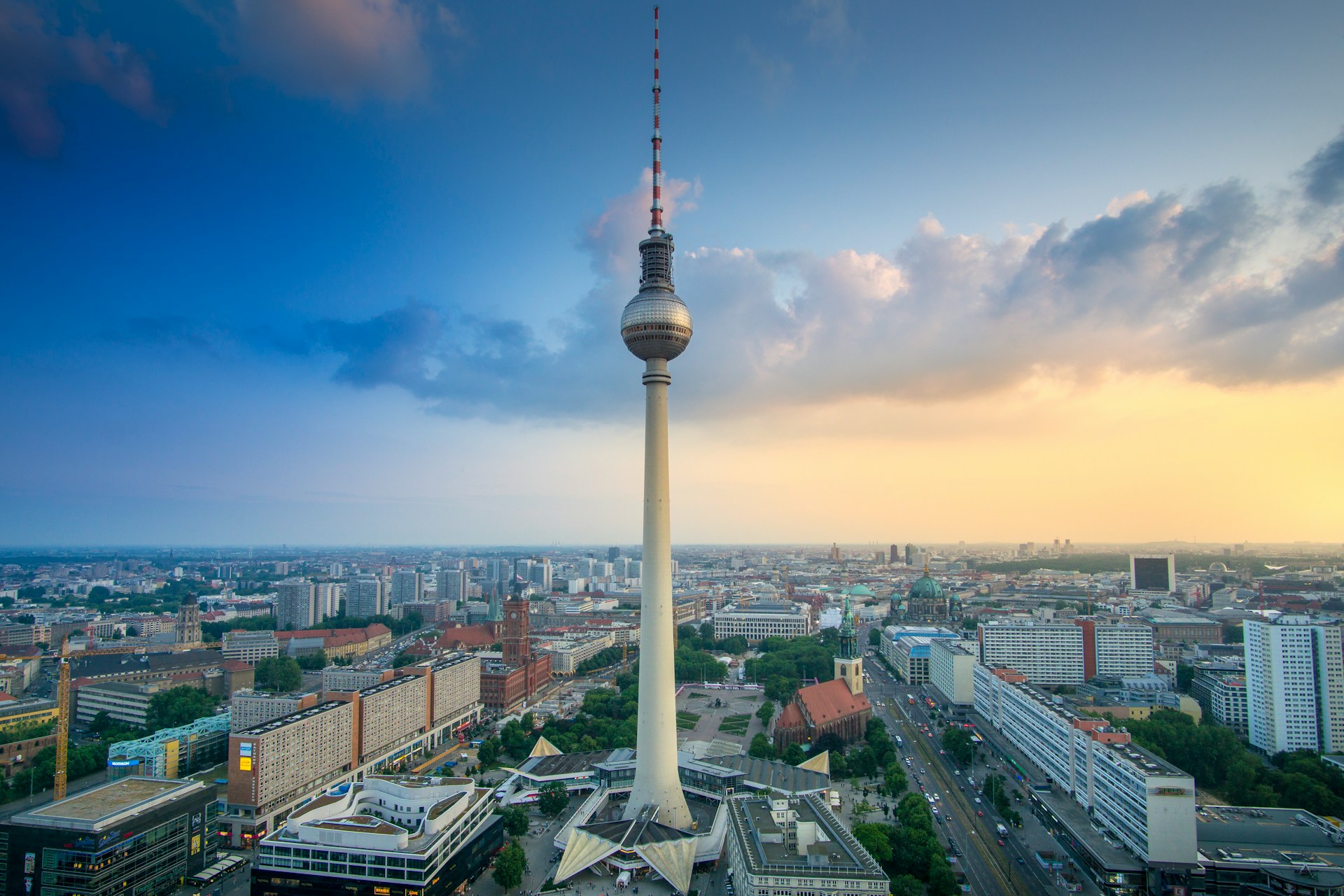
Berlin is Germany's capital and largest city, home to around 3.7 million people and one of Europe's most internationally diverse urban populations. It is a city that rebuilt itself from near-total destruction, and that history runs through every neighbourhood: Cold War checkpoints turned into street art, empty lots converted into tech campuses, former industrial zones now hosting some of the continent's most inventive food and cultural scenes. For expats and internationally mobile professionals, it offers something increasingly rare: a major European capital where the cost of living remains manageable, the job market is genuinely broad, and English works surprisingly well for daily life.
What makes Berlin distinctive for incoming professionals is the sheer range of reasons people come. Wunderflats data covering June 2025 to May 2026 shows that 53.5% of furnished-apartment tenants in Berlin are here for work, with software engineers, managers, and founders the most common professional profiles. A further 18.6% are students, and 18.2% have an immediate temporary housing need: relocation in progress, renovation, or a transition between contracts. The city serves all of these groups simultaneously, which shapes both its rental market and its social fabric.
The numbers behind that mix tell a clear story about how people actually live here. The average Wunderflats stay in Berlin runs to 154 days — just over 5 months — which means most tenants are genuinely settling in rather than passing through. Demand peaks in March, July, and April, corresponding to spring corporate relocations and the start of academic and internship cycles. Quieter periods in October and November can make it somewhat easier to secure accommodation. Source: Wunderflats internal data, Jun 2025–May 2026.
This guide is written for people who are moving to Berlin or planning to, and it draws on Wunderflats' first-party booking data alongside verified public sources to give you an accurate picture of what the city actually costs, where to live, and how the practical systems work.
Key facts
Berlin is a city-state, meaning it functions simultaneously as a federal state (Land) and a city. That dual status affects everything from its governance structure to its comparatively large public sector workforce.
| Fact | Detail |
|---|---|
| Population | ~3.7 million (city); ~6.2 million (greater metro area) |
| Area | 892 km² — nearly 10 times the area of Paris proper |
| Official language | German. English widely spoken in professional and central districts. |
| Climate | Temperate continental. Cold winters (avg. 0°C in Jan), warm summers (avg. 24°C in July). ~1,700 hours of sunshine per year. |
| Transport network | 10 U-Bahn lines, 16 S-Bahn lines, extensive tram network, 150+ bus routes. Operated by BVG. |
| Key industries | Technology, media, creative industries, tourism, health sciences, public administration, fintech, e-commerce |
| Quality of living | Ranked 4th globally for liveability (Global Power City Index 2025) |
| Typical furnished rental | 1,000–2,000 EUR/month (72% of Wunderflats bookings). Average across all bookings: 1,561 EUR/month. Source: Wunderflats internal data, Jun 2025–May 2026. |
| Average stay length | 154 days (~5 months) for standard bookings. Source: Wunderflats internal data, Jun 2025–May 2026. |
Neighbourhoods
Berlin's size means neighbourhood choice has a real impact on daily life. The city is divided into 12 boroughs (Bezirke), each with distinct character, price levels, and transport links. The most practical way to compare is by rent per square metre: Mitte and Prenzlauer Berg command the highest prices, while Neukölln and Friedrichshain offer the best value in the inner ring.
Average rent per m² by neighbourhood (EUR/month, 2026)
Sources: Investropa Berlin Rent Analysis 2026; ImmodoberlinBezirksvergleich 2026
Mitte is Berlin's governmental and cultural core. Brandenburg Gate, Museumsinsel, Alexanderplatz, and the Hauptbahnhof are all within easy reach. Around 37% of Mitte residents are foreign nationals, and English is spoken in most shops, restaurants, and offices. It is the most expensive option but also the most connected.
Prenzlauer Berg is consistently the top choice for expat families. Tree-lined streets, excellent schools, organic markets, and Mauerpark define the neighbourhood. It is affectionately known as "Parentslauer Berg" for the density of young families. Prices are high but the quality of daily life justifies it for those with children or a preference for calm.
Charlottenburg-Wilmersdorf attracts expats who prefer a quieter, more classical European city feel. The Kurfürstendamm boulevard, the Schloss Charlottenburg, and the Deutsche Oper sit within walking distance of excellent transport links. It suits professionals in finance, consulting, or larger corporates.
Friedrichshain is the natural home for younger professionals, tech workers, and students. It borders the East Side Gallery and Warschauer Straße, where many of Berlin's tech employers cluster. Rents remain reasonable relative to the central neighbourhoods, and the nightlife and cultural scene are unmatched.
Neukölln offers the best value in the inner ring and has gentrified rapidly over the past decade. The northern part (Reuterkiez and Schillerkiez) has a lively independent restaurant and café scene. It suits those who want central access on a tighter budget. Wedding, Lichtenberg, and Spandau are the best options for those willing to commute further in exchange for significantly lower rents.
Transport
Berlin's public transport network is extensive and reliable. The BVG operates U-Bahn (underground), S-Bahn (overground), tram, and bus services across three fare zones: A (inner ring), B (outer Berlin), and C (including Brandenburg and the airports). For most expats, the Deutschlandticket is the clearest and most cost-effective option.
| Ticket | Coverage | Price (2026) |
|---|---|---|
| Deutschlandticket | All local and regional public transport across Germany | 63 EUR/month |
| Single ticket (AB) | One journey within zones A and B (inner Berlin) | 4.00 EUR |
| Short trip (Kurzstrecke) | Up to 3 stops on U/S-Bahn or 6 stops on bus/tram | 2.80 EUR |
| Single ticket (ABC) | Zones A, B, and C — required for airport journeys | 5.00 EUR |
| 24-hour ticket (ABC) | Unlimited travel all zones for 24 hours | 12.90 EUR |
| Social ticket (Ticket S) | For benefit recipients — zones A and B | 27.50 EUR/month |
ℹ Info: The 7-day travel card was discontinued as of 1 January 2026. The Deutschlandticket at 63 EUR/month is now the most cost-effective option for regular commuters. Note that fares increased by approximately 6% at the start of 2026.
Berlin has over 1,400 km of cycling infrastructure, and many expats use bikes as their primary transport for shorter distances, especially in the flat inner districts. Bike sharing is available via Nextbike and Lime. Car ownership in central Berlin is expensive and largely unnecessary: parking is restricted, and many streets are increasingly pedestrianised.
Cost of living
Berlin is significantly more affordable than other major Western European capitals. A single expat living comfortably spends around 2,200–3,000 EUR/month. The range is wide because rent, the largest variable, depends heavily on neighbourhood and apartment type.
| Category | Monthly estimate | Notes |
|---|---|---|
| Furnished rent (1BR) | 1,000–2,000 EUR | 72% of Wunderflats Berlin bookings fall in this range. Average across all entire apartments: 1,669 EUR/month. Private rooms average 799 EUR/month. Source: Wunderflats internal data, Jun 2025–May 2026. |
| Groceries | 250–350 EUR | Discounters (Aldi, Lidl, Rewe) make Berlin one of the most affordable major cities for food. |
| Public transport | 63 EUR | Deutschlandticket covers all zones and all of Germany. |
| Health insurance (employee) | ~200–450 EUR | Employees pay approx. 7.3% of gross salary; employers match. Freelancers pay the full 14.6% themselves, minimum ~200 EUR/month. |
| Utilities (if not included) | 100–200 EUR | Most furnished rentals include utilities. Broadcasting fee (Rundfunkbeitrag): 18.36 EUR/household. |
| Dining out | 150–300 EUR | Berlin has a large range from 8–12 EUR lunch spots to 40+ EUR fine dining. |
| Leisure and sport | 50–150 EUR | Gym memberships from 25 EUR/month. Many free outdoor activities (parks, lakes, cycling). |
💡 Tip: Furnished apartments on Wunderflats typically include internet, often utilities, and always kitchen equipment and bedding. For expats on short-to-medium assignments, the all-in price is almost always lower than unfurnished rent plus setup costs.
Rental market breakdown by home type
Entire apartments dominate the Berlin furnished rental market: 91% of Wunderflats bookings in Berlin are for a whole apartment, at an average monthly price of 1,669 EUR. Private rooms average 799 EUR/month and account for 7% of bookings, a useful option for students or budget-conscious solo movers. Entire houses are rare (under 1% of bookings) and command a significant premium at an average of 2,791 EUR/month.
| Home type | Share of bookings | Avg monthly price |
|---|---|---|
| Entire apartment | 91% | 1,669 EUR |
| Private room | 7% | 799 EUR |
| Entire house | <1% | 2,791 EUR |
| Shared place | <1% | 806 EUR |
Source: Wunderflats internal data, Jun 2025–May 2026.
Healthcare
Germany's healthcare system is consistently rated among the best in Europe. Berlin in particular has a higher physician density than the national average, meaning wait times for GP appointments are generally shorter than in comparable cities.
Physicians per 1,000 inhabitants
Source: Destatis / OECD Health at a Glance 2025. Figures are approximate; Berlin and Munich are consistently above the national average.
Germany operates a dual health insurance system. Employees with a gross salary below the annual threshold (around 69,300 EUR in 2026) are automatically enrolled in statutory health insurance (gesetzliche Krankenversicherung, or GKV). The contribution is around 14.6% of gross salary, shared equally between you and your employer. If you earn above the threshold, you can choose between GKV and private health insurance (private Krankenversicherung, PKV).
Freelancers pay the full GKV contribution themselves, which works out to around 200–450 EUR/month depending on income. New arrivals should register with a statutory insurer (e.g. TK, AOK, Barmer) within a few weeks of starting work — your employer will generally guide this process.
Finding a GP (Hausarzt) in Berlin is straightforward. Unlike some German cities, you do not need to register with a practice based on your postcode. The online booking platform Doctolib is widely used across Berlin for both GPs and specialists. International practices offering English-language consultations are particularly concentrated in Mitte, Charlottenburg, and Prenzlauer Berg.
Working life
Berlin is Germany's largest start-up ecosystem and one of the top five tech hubs in Europe. It is also home to significant public sector employment, a large creative economy, and a growing financial services cluster. The city attracts a highly international workforce: Wunderflats data shows that the top nationalities renting in Berlin include German (25.3%), Indian (13.5%), American (8.8%), Italian (3.8%), and French (3.7%), reflecting the international composition of its major employers.
The most common professional profiles among Wunderflats tenants in Berlin are software engineers (11.6% of bookings), general managers (9%), and founders and C-suite executives (5.3%), followed by consultants, product managers, researchers, and data analysts. This reflects the dominance of tech, scale-up, and professional services employment in the city's tenant base.
Major employers include Zalando, Delivery Hero, HelloFresh, Siemens Energy, Deutsche Bahn, Bayer, and a large ecosystem of venture-backed start-ups. Several US and Asian tech companies have their European headquarters or significant engineering offices in Berlin, which drives strong demand for international talent and, in turn, for mid-term furnished housing.
Work culture in Berlin is less formal than in Frankfurt or Munich. English is the working language in most tech companies. Salaries are lower than in London or Zurich but this is significantly offset by lower costs: Berlin's combination of tech-sector wages and affordable living makes net disposable income competitive with higher-salary cities.
One useful signal for prospective tenants: Wunderflats data shows that 6% of Berlin bookings are paid directly by employers, with a further 3.7% covered by parents (typically for students). The dominant pattern, at 90%, is self-funded. This matters when budgeting: unlike in some financial centres, Berlin corporate relocation packages rarely include rent top-ups, so most incoming professionals are working with their own net income.
The typical assignment or contract length aligns closely with average stay duration. At 154 days, the average Wunderflats booking in Berlin sits between a 6-month and a 3-month stint, which is exactly the sweet spot for furnished mid-term rentals. This also means the market turns over regularly, and new supply comes online continuously throughout the year.
Monthly booking demand in Berlin (net standard bookings, Jun 2025–May 2026)
Source: Wunderflats internal data, Jun 2025–May 2026. Standard bookings only.
Culture and leisure
Berlin rewards long-term residents in ways that short visits cannot reveal. The city has more museums than rainy days per year (around 170 museums and galleries), three UNESCO World Heritage Sites, and a performing arts scene that includes three opera houses and one of the world's great symphony orchestras, the Berlin Philharmonic.
The outdoor life is a genuine surprise for newcomers. Berlin has over 2,500 parks and green spaces, including the Tiergarten (a 210-hectare park in the city centre), the forests and lakes of Grunewald to the west, and Müggelsee to the southeast. Swimming in Berlin's lakes is free, and the cycling network means most of these spaces are genuinely accessible without a car.
The food scene is exceptionally diverse. Berlin's large Turkish community has made it famous for döner kebab, but the city's restaurant landscape now covers virtually every cuisine at every price point. The weekly markets at Kollwitzplatz (Prenzlauer Berg), Boxhagener Platz (Friedrichshain), and Maybachufer (Neukölln) are worth building into your weekend routine.
Nightlife is Berlin's global calling card. The techno club scene centred on Berghain, Tresor, and Watergate is internationally known, but the city also has a rich live music scene, a large independent cinema culture, and a theatrical tradition that runs from experimental fringe to the Berliner Ensemble.
"Berlin has more museums than rainy days per year, three UNESCO World Heritage Sites, and one of the world's great symphony orchestras."
Crime and safety
Berlin is a safe city by the standards of major European capitals, though its recorded crime rate is higher than Munich or Hamburg — primarily due to its size, density, and the concentration of tourism and nightlife. Overall recorded crimes in Berlin fell in 2025 compared to 2024, according to the Berlin Police Polizeiliche Kriminalstatistik 2025.
Recorded crimes per 100,000 inhabitants (approx., lower = safer)
Source: Polizeiliche Kriminalstatistik (PKS) 2025, Bundeskriminalamt. Figures are approximate and reflect total recorded offences including minor crimes. Berlin's higher rate reflects urban density and tourism concentration, not a meaningful elevated personal safety risk for residents.
The practical safety picture for expats is reassuring. Pickpocketing is the most common issue, concentrated in tourist-heavy areas like Alexanderplatz, the S-Bahn ring, and busy station platforms. Violent crime against residents in residential neighbourhoods is rare. The areas around Görlitzer Park (Kreuzberg) and parts of Neukölln have a higher visible drug presence but are not inherently dangerous for people living and working there.
Practical precautions: register your bicycle (it will almost certainly be stolen if you do not lock it properly with a quality U-lock), keep bags close on busy public transport, and be aware that Berghain queues and nightlife areas attract opportunistic theft. Beyond that, Berlin is a normal, functional European capital.
Practical tips
The checklist below covers the most important actions before you arrive, on arrival, and once you are settled. Getting the Anmeldung done immediately unlocks almost everything else.
Before you arrive
- Book furnished accommodation first: You need a registered address to complete Anmeldung. A furnished apartment on Wunderflats can be booked in advance with a confirmed move-in date, giving you a valid address immediately.
- Check visa requirements: EU/EEA citizens do not need a visa. Non-EU citizens should confirm their required visa category at the German embassy in their home country before travelling.
- Open a German bank account in advance if possible: N26, Bunq, and Wise all offer accounts that can be opened before arrival and are widely accepted by landlords and employers.
- Get your documents together: Passport, employment contract (if applicable), proof of health insurance, and any relevant academic or professional credentials.
On arrival
- Complete Anmeldung within 14 days: Register your address at your local Bürgeramt. Book the appointment online in advance — same-day slots are very limited. You will receive a Meldebescheinigung (registration certificate) immediately.
- Get your Steuer-ID: Your tax identification number is sent by post to your registered address within a few weeks. You need it for your first payslip and for most financial accounts.
- Register with a GP (Hausarzt): Use Doctolib or ask your employer's HR team. Most English-speaking practices have capacity for new patients in central districts.
- Buy the Deutschlandticket: Available via the BVG app or your employer's benefits portal. Some employers subsidise or fully cover it as a job ticket (Jobticket).
Once settled
- Register with your Finanzamt: Freelancers and self-employed residents must register with the local tax office and apply for a tax number (Steuernummer) separate from the Steuer-ID.
- Explore the Volkshochschule: Every borough has a publicly funded adult education centre offering German language courses, often at 100–200 EUR per semester. The fastest way to reach working-level German.
- Get a library card (Bibliotheksausweis): Berlin's public library network is excellent and free. The card also gives access to digital magazines, e-books, and language learning tools.
- Understand the recycling system: Berlin has a strict colour-coded waste separation system. Your building's caretaker (Hausmeister) can explain the local setup — non-compliance can result in building-level fines.
FAQs about living in Berlin
How much does it cost to live in Berlin per month?
A single expat living comfortably in Berlin typically spends between 2,200 and 3,000 EUR per month, including rent. Based on Wunderflats booking data (June 2025–May 2026), 72% of furnished 1-bedroom rentals in Berlin fall between 1,000 and 2,000 EUR/month, with the 1,000–1,500 EUR range the most common.
What is the best neighbourhood in Berlin for expats?
It depends on your priorities. Prenzlauer Berg suits expat families well, with good schools and a calm residential atmosphere. Mitte is the most central and English-friendly option. Friedrichshain is best for younger professionals and students who want nightlife and tech-sector proximity. Charlottenburg-Wilmersdorf suits those who prefer a quieter, more classical European neighbourhood.
Do I need to speak German to live in Berlin?
Day-to-day life in central Berlin is manageable in English, particularly in tech, finance, and creative industries. Government offices, healthcare administration, and most legal matters require German or a reliable interpreter. Learning functional German significantly improves your integration and opens up a wider job market.
How does health insurance work in Berlin?
Germany has a dual public-private health insurance system. Employees earning below the annual threshold (approx. 69,300 EUR in 2026) are enrolled in statutory health insurance (GKV), with contributions around 14.6% of gross salary split between employer and employee. Freelancers pay the full rate, with a minimum of around 200 EUR/month. Private insurance (PKV) is available to higher earners and offers faster specialist access.
How long does it take to find a furnished apartment in Berlin?
On Wunderflats, most Berlin tenants secure a furnished apartment within a few days of submitting booking requests. 67% of Wunderflats bookings in Berlin are for stays of 3 months or longer. The platform lists apartments across all Berlin boroughs, with the majority priced between 1,000 and 2,000 EUR/month.
Sources
- Wunderflats internal booking data, Berlin, June 2025–May 2026
- BVG — All tickets at a glance (2026)
- Berlin Police — Polizeiliche Kriminalstatistik 2025
- OECD Health at a Glance 2025 — Physician density
- Bundeskriminalamt — Police Crime Statistics
- Investropa — Berlin Rent Analysis 2026
- Numbeo — Cost of Living in Berlin, July 2026
- All About Berlin — Cost of living in Berlin and Germany
- Visit Berlin — Top: Berlin in rankings (GPCI 2025)